THE CHALLENGE
Burberry
A strategic case for repositioning Burberry from accessible luxury to an ultra-premium British brand.
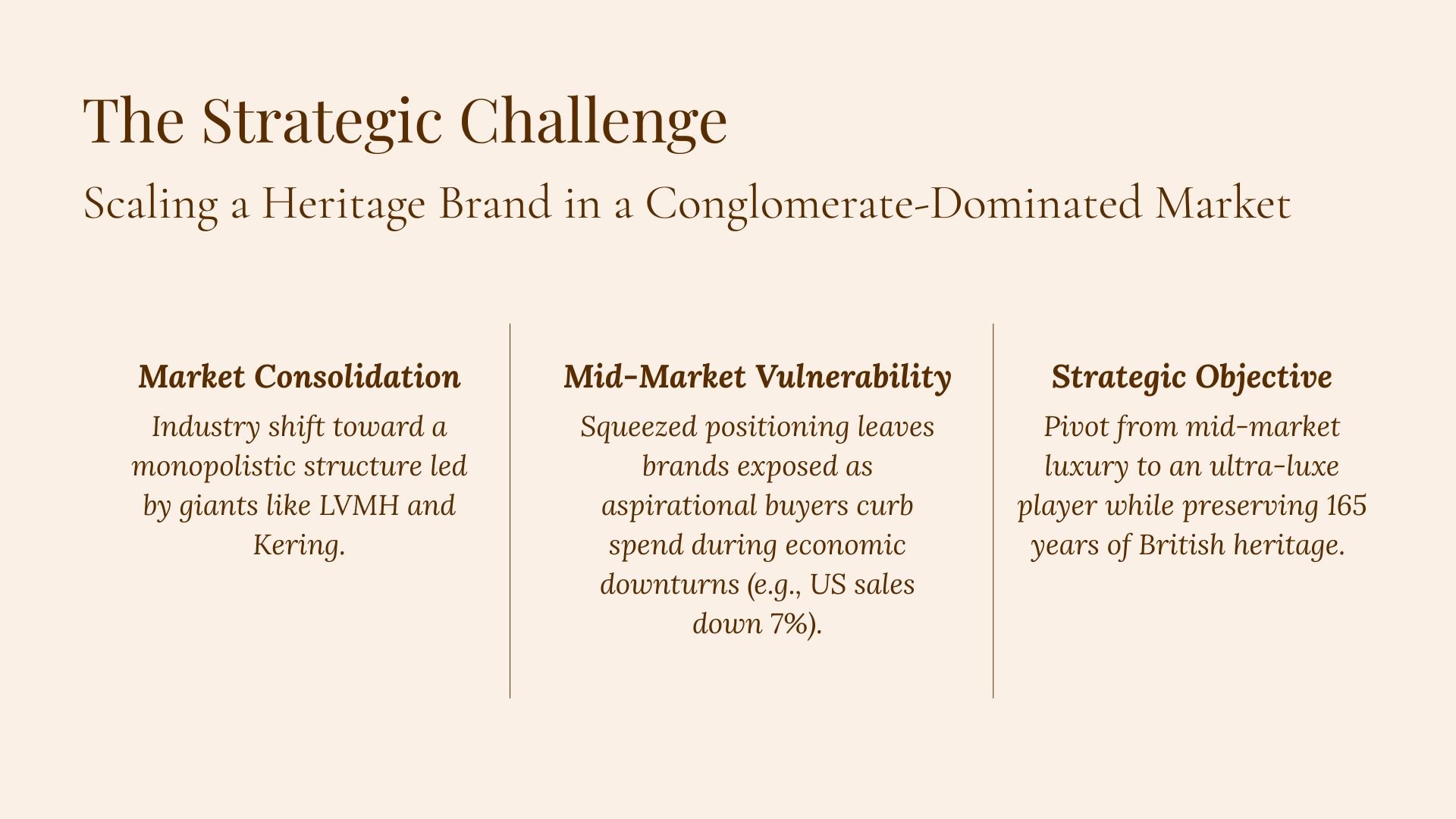
Luxury fashion has been consolidating around a small number of multi-brand groups, squeezing margins and diluting identity at independent heritage brands. Burberry faced a real strategic question: how to counter slowing demand among aspirational buyers in core markets and move the brand from accessible luxury toward an ultra-premium British position.



Reviewed Burberry's multi-year transformation across digital, product, and retail.
-
Structural shift: luxury buyers are increasingly rewarding extreme exclusivity and penalising middle-market luxury.
-
Category exposure: reliance on entry-level aspirational lines and shifting regional demand, particularly across the US and APAC.
-
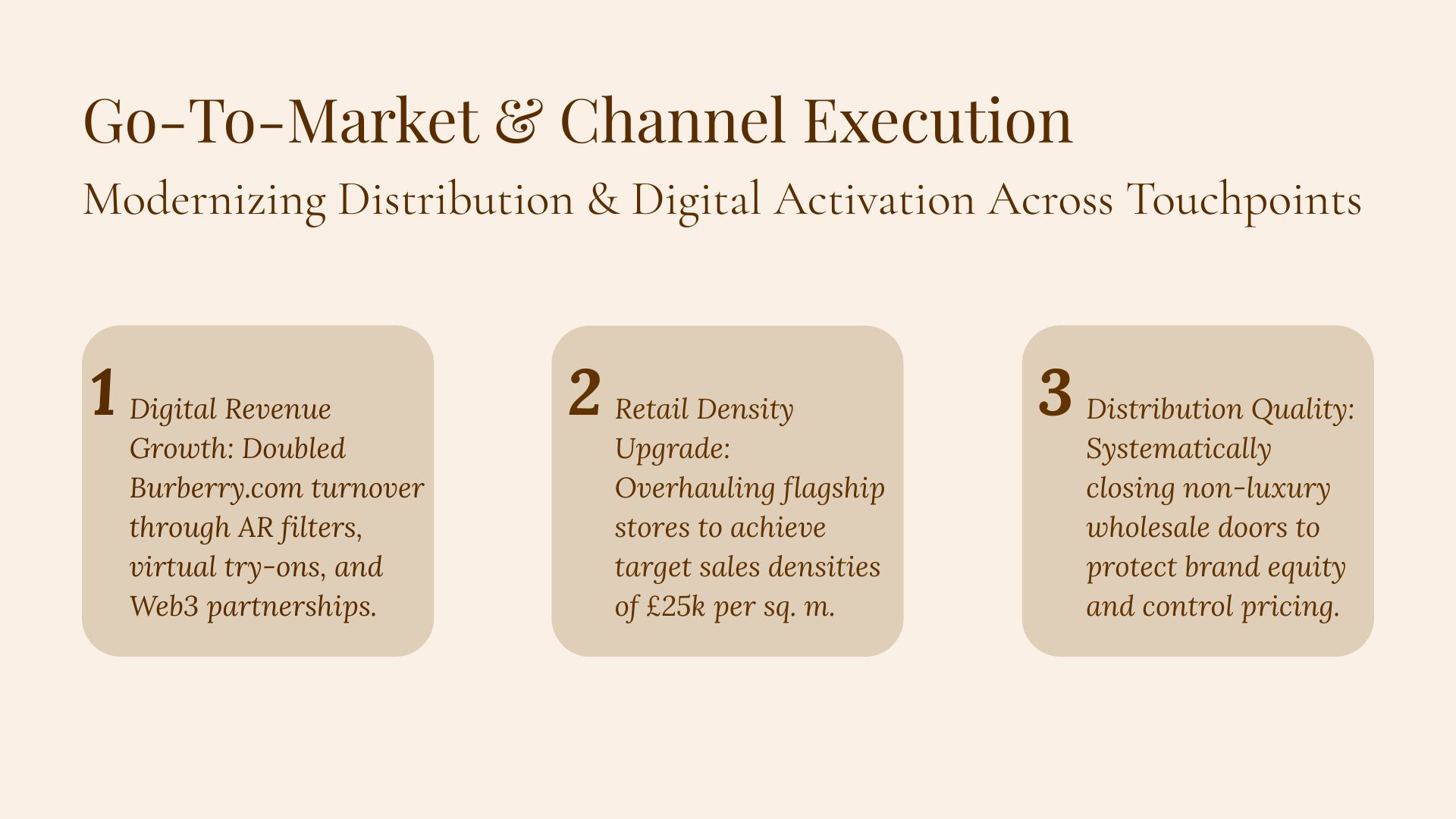
The gap: strong digital and outerwear performance, but not enough product scarcity or average unit retail to build long-term brand equity.
Strategic Recommendations
-
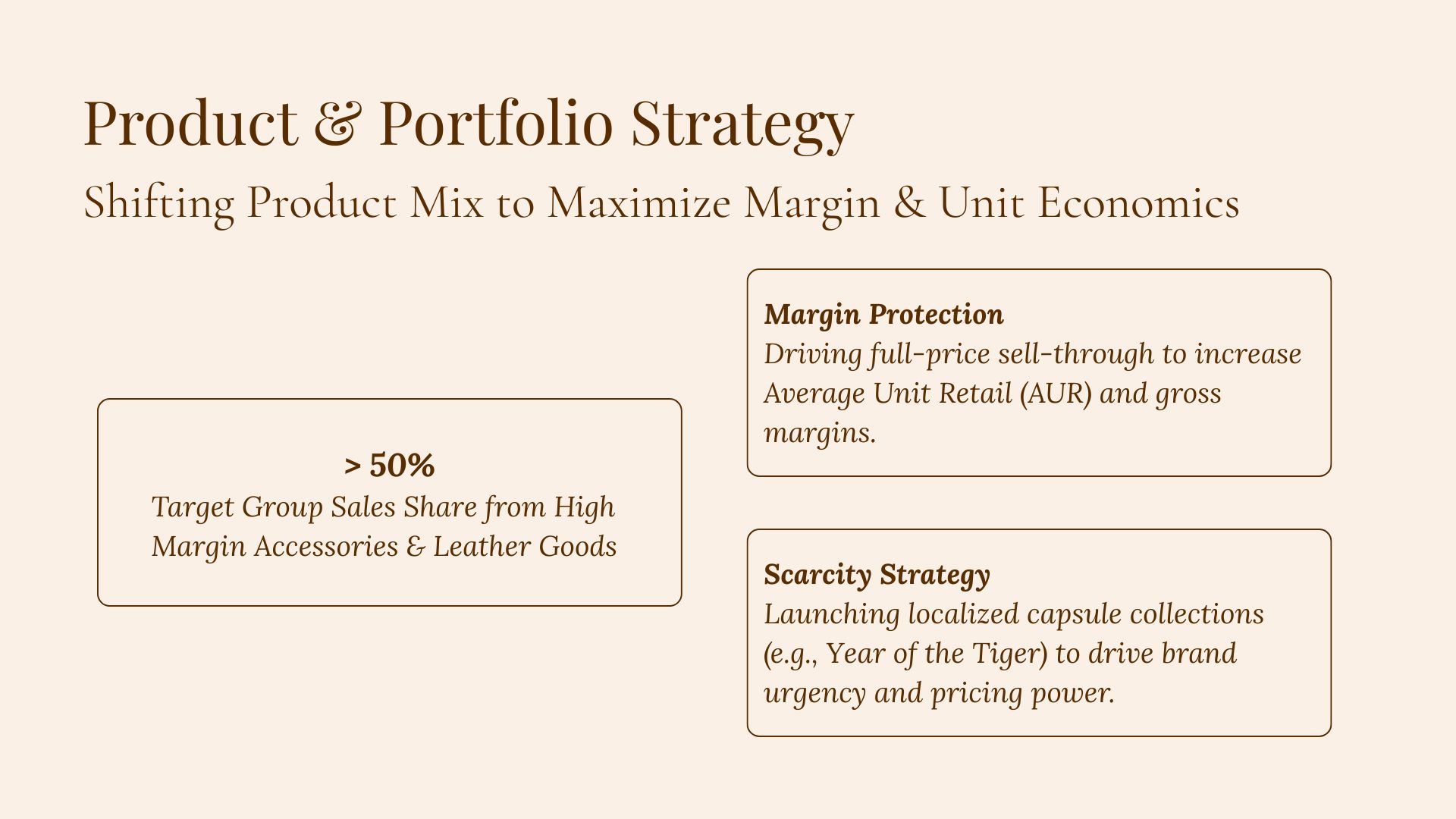
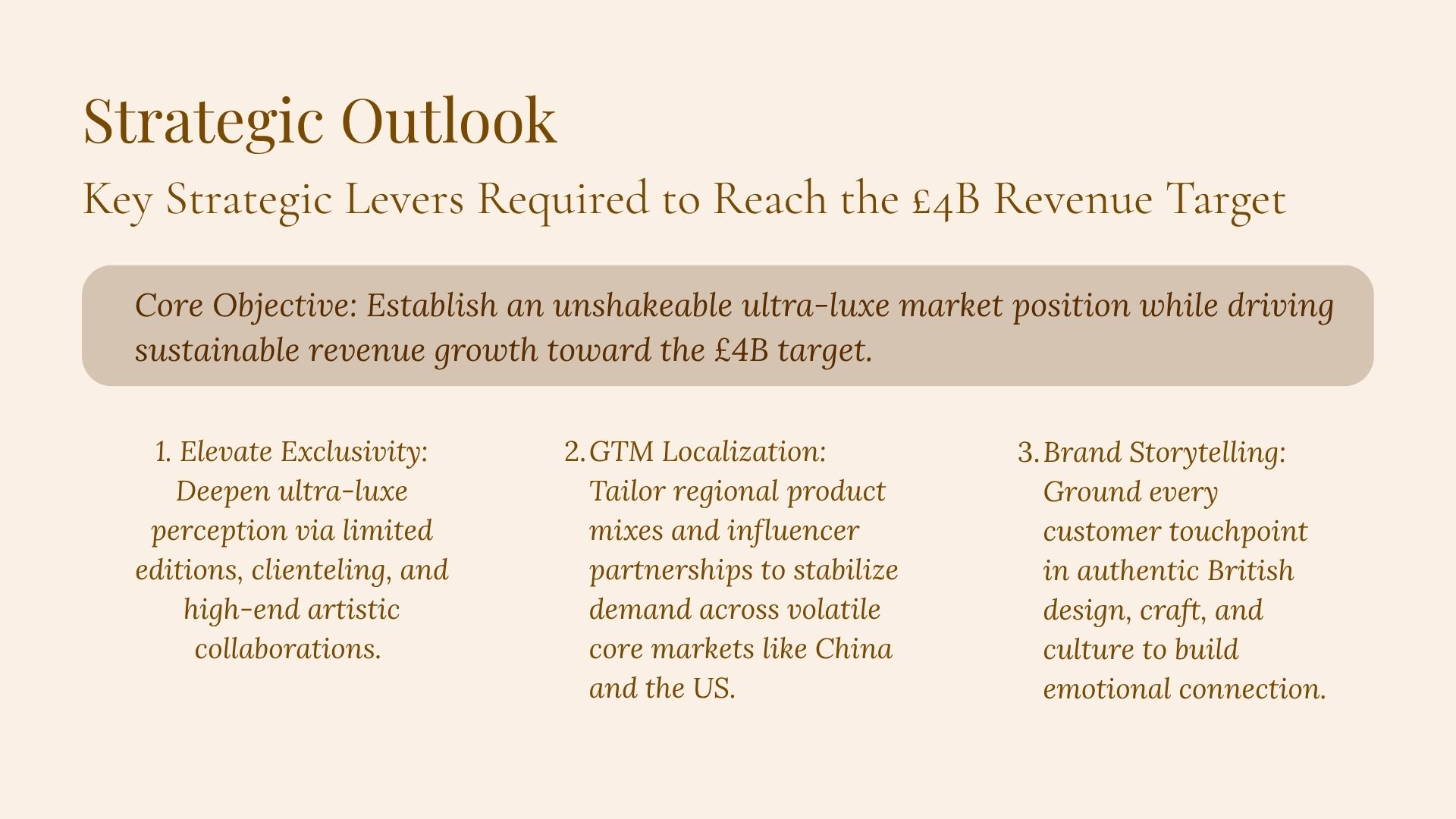
Elevate product exclusivity: limited runs, bespoke offerings, and high-craft collaborations to build scarcity among ultra-high-net-worth buyers.
-
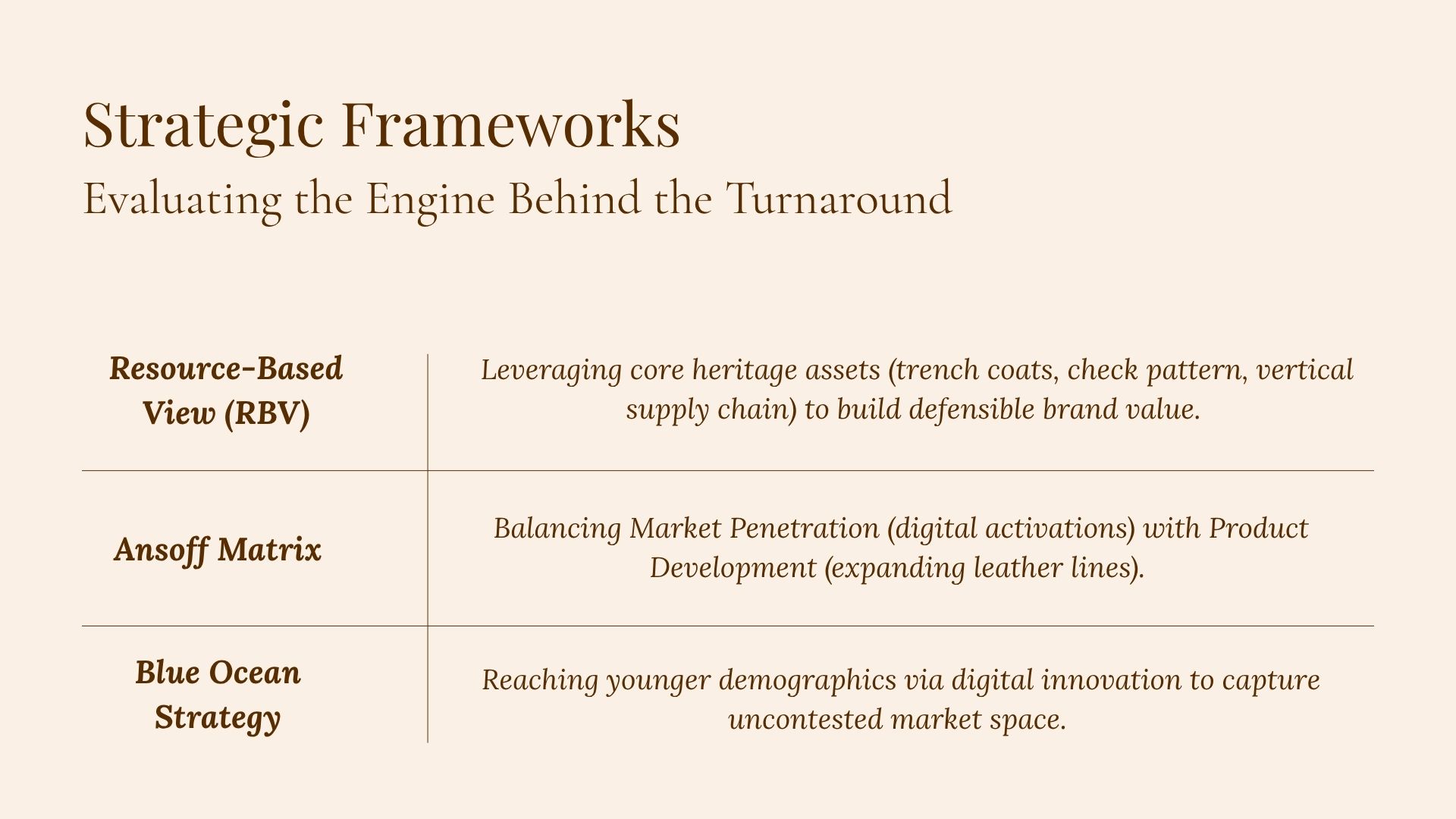
Double down on heritage: reposition the gabardine trench and British craft identity through storytelling and flagship concept stores.
-
Rationalise the portfolio: shift retail toward high-density creative concepts while scaling e-commerce and accessories for margin.
The Verdict
Brand elevation in this category requires a short-term volume trade-off. Moving from accessible to ultra-luxe means restricting entry-level exposure and prioritising compounding equity over quick sales.
Disclaimer: Independent strategic assessment and corporate strategy analysis. Not affiliated with or commissioned by Burberry Group PLC.